Patient Safety in Air Ambulance Transfers: What It Takes to Get It Right
In healthcare, harm doesn’t usually come from a lack of effort. It comes from gaps – in planning, in communication, in systems that weren’t designed for pressure.
Reducing those gaps has been a global priority for years. The World Health Organization has defined 2021–2030 as a Decade of Patient Safety, calling for healthcare organizations to reduce avoidable harm by making safety part of how care is planned, delivered, and reviewed.
In air ambulance transfers, where care unfolds across hospitals, aircraft, and borders, that systems-based view of safety is essential. It’s how we approach every mission at Bluedot.
When people think about air ambulances, they usually picture speed. An aircraft racing against the clock to save a life. It’s a powerful image, and in some ways, it’s true.
But here’s what most people don’t see: speed only matters if the patient arrives safely. And safety in air ambulance transfers depends far more on what happens before the flight than how fast the plane moves.
Every air ambulance mission is a high-stakes medical operation. The work that keeps patients safe begins long before the aircraft leaves the ground.
Deciding who’s ready to fly
Not every critically ill patient is ready for air transfer, even when time feels urgent.
Before any flight, the medical team needs to understand the full picture: What’s the patient’s current condition? How stable are they? What could go wrong during the flight?
This means reviewing medical records, talking directly with the doctors and nurses treating the patient, and often visiting the patient in person to assess them firsthand.
Flying introduces unique challenges to the human body. Cabin pressure drops. Oxygen levels change. There’s vibration, noise, and limited space. For a patient who’s already unstable, these factors can make things worse quickly.
So sometimes, the right decision is to wait. To stabilize the patient more before moving them. It’s not always what families want to hear, but it’s the responsible choice. Patient safety comes before operational pressure.
Where the real work happens
The day of the flight might look like the main event, but the real work happens in the planning phase.
This is where the team figures out: Which aircraft is right for this patient? What medical equipment needs to be on board? Who should be part of the medical crew?
Then there’s the logistics. Ground ambulances need to be coordinated. Airports need to be notified. International clearances and landing permits need to be arranged. The receiving hospital needs to be ready.
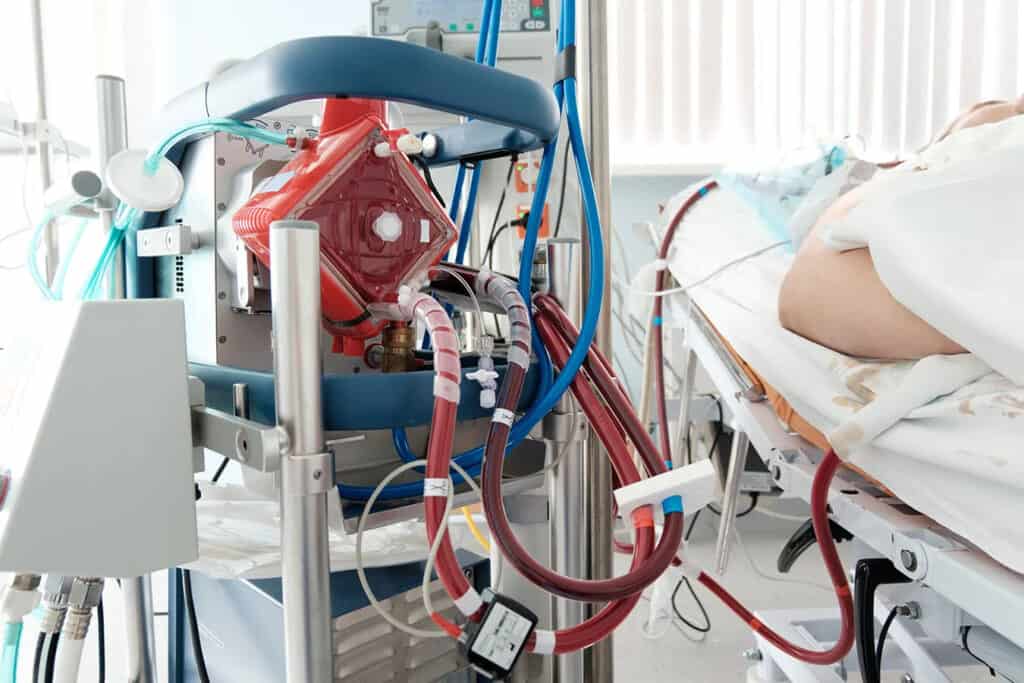
And the equipment? Everything from ventilators to oxygen systems must be aviation-certified and tested. Backups are mandatory. If something fails mid-flight, there’s no pulling over to fix it.
This kind of detailed planning doesn’t make headlines. But it’s what saves lives.
Good people make good systems work
You can have the best equipment and protocols in the world, but if the people aren’t prepared, it won’t matter.
Air ambulance crews need to know critical care medicine and aviation medicine. They need to stay calm under pressure. They need to work together seamlessly in tight spaces where there’s no room for miscommunication.
Bluedot invests in ongoing training, simulation exercises, and clear protocols. Teams rehearse what to do when things go wrong. They use checklists and structured briefings, the same way airlines do.
It’s about creating a culture where everyone knows their role, communicates clearly, and follows the process even when it’s stressful.
Staying ahead during the flight
Once the patient is on board, the medical team isn’t just watching the monitors. They’re anticipating what could happen next.
Altitude changes how the body works. The team watches closely and adjusts medications, ventilator settings, and fluid management based on what they’re seeing and what they know is coming.
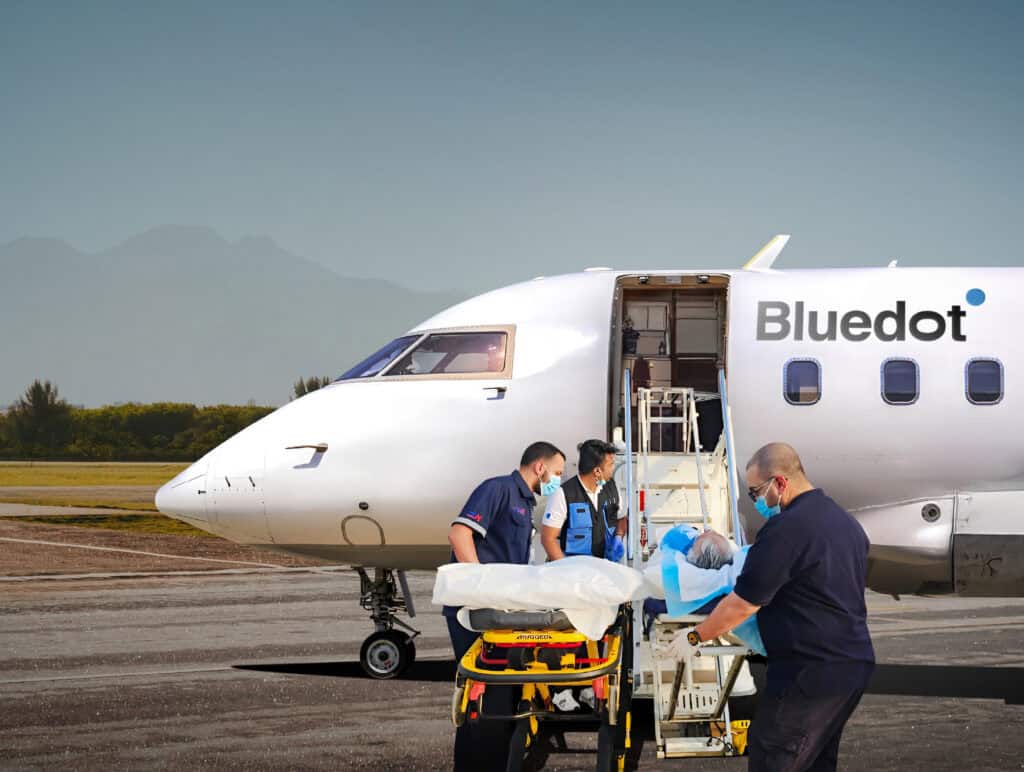
Every handoff is a risk point: moving the patient from the ICU to the ambulance, from the ambulance to the aircraft, from the aircraft to the receiving hospital. Each one has to be controlled and smooth.
One mistake at any of these points can undo everything that came before it.
The job isn’t done when the plane lands
When the aircraft touches down, there’s still critical work to do.
The receiving hospital needs a full handover. They need to know exactly what happened during the flight: what medications were given, what the patient’s vitals were, what complications arose.
Without this step, information gets lost. Gaps form. And those gaps can put the patient at risk all over again.
A safe transfer means the receiving team can continue care immediately, with full context and no surprises.
What to ask before choosing an air ambulance provider
If you’re ever in the position of choosing an air ambulance provider, it’s natural to want the fastest response. But speed is only part of the equation.
Here are better questions to ask:
- How do you decide if a patient is stable enough to fly?
- What happens if something goes wrong during the flight?
- How are your medical crews trained?
- What kind of backup systems do you have for equipment?
- How do you hand over care to the receiving hospital?
A good provider won’t be defensive about these questions. They’ll be glad you’re asking. At Bluedot, these conversations are part of every transfer, because informed decision-makers make better choices, and better choices lead to safer outcomes.
The bigger picture on safety
According to the World Health Organization, around 1 in 10 patients is harmed during healthcare. More than 3 million deaths occur each year due to unsafe care. Over half of that harm could have been prevented.
In air ambulance services, where conditions are inherently high-risk, there’s no room for shortcuts.
Bluedot has a 100% transfer success rate that comes from strictly following, even exceeding, world-class safety procedures and protocols. Our approach to preventing harm is built on aviation-grade safety systems, including structured risk assessment, incident reporting, and continuous review processes.
Every mission is a chance to learn and improve. The organizations that take this seriously are the ones that consistently deliver safe outcomes.