Flying with ECMO: What It Takes to Transfer the Most Critical Patients by Air
When a loved one is seriously ill, every decision feels enormous. And when the doctors say that the care they need isn’t available at the current hospital that they need to be moved, urgently, to a specialist centre elsewhere, the weight of that moment is hard to describe.
For patients in severe cardiac or respiratory failure, that journey often needs to happen by air. And it needs to happen with one of the most advanced forms of life support available — ECMO.
At Bluedot, these are among the most complex missions we undertake.
What is ECMO?
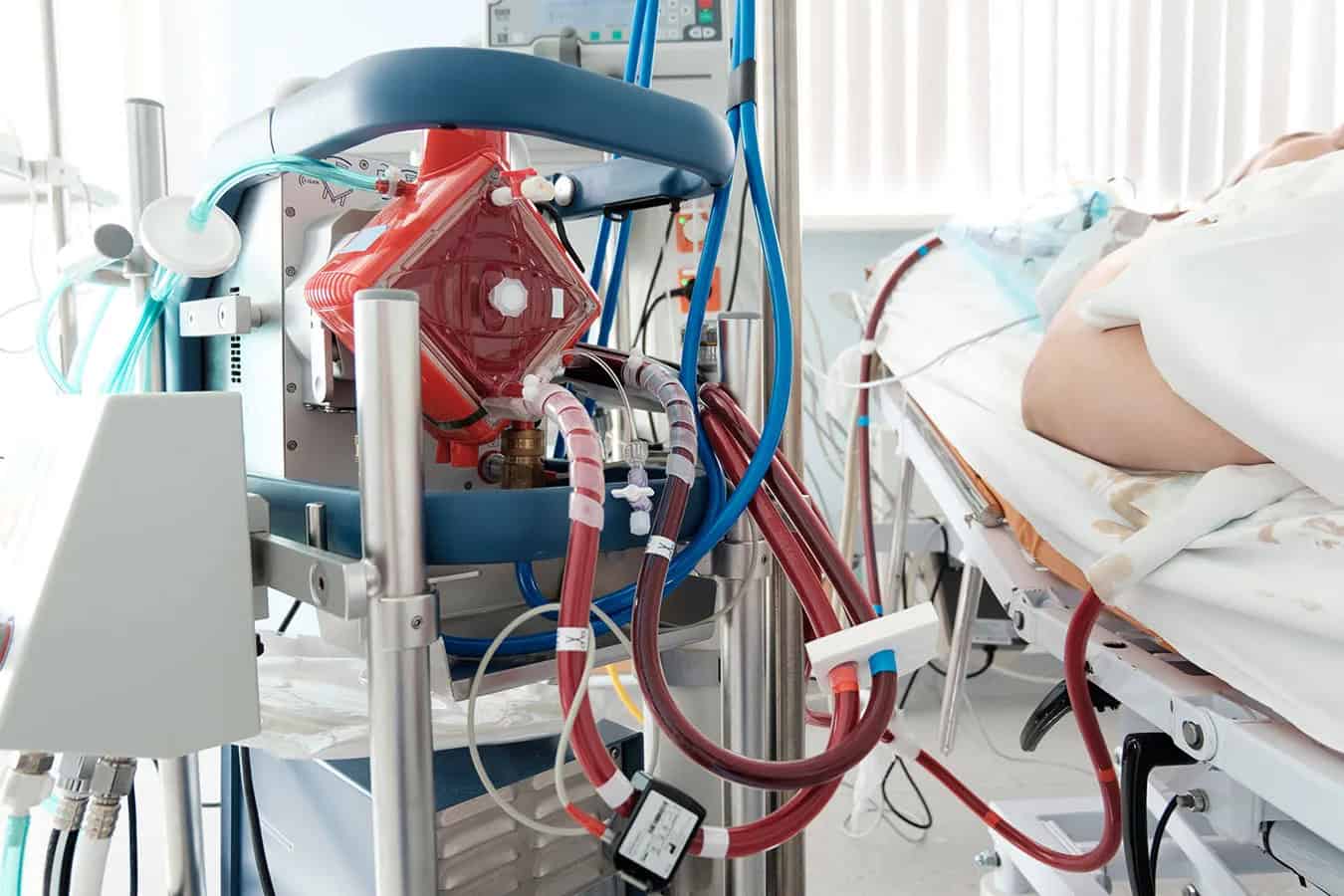
ECMO — Extracorporeal Membrane Oxygenation is an advanced life support technology that temporarily assists the heart, the lungs, or both, when they are unable to function adequately on their own.
Blood is drawn from the patient, oxygenated through a specialised circuit outside the body, and returned, keeping them stable while their organs recover, or while they await surgery or transplantation.
It is not a permanent solution. It is a bridge, a carefully managed, highly technical bridge that buys time when time is what the patient needs most.
Why Air Transport Becomes Necessary
A hospital that initiates ECMO has done something remarkable, it has stabilised a patient in a very serious condition. But not every hospital has the specialist resources to complete that patient’s care. A transplant programme, an advanced cardiac surgery unit, a dedicated ECMO centre, these exist only in certain places.
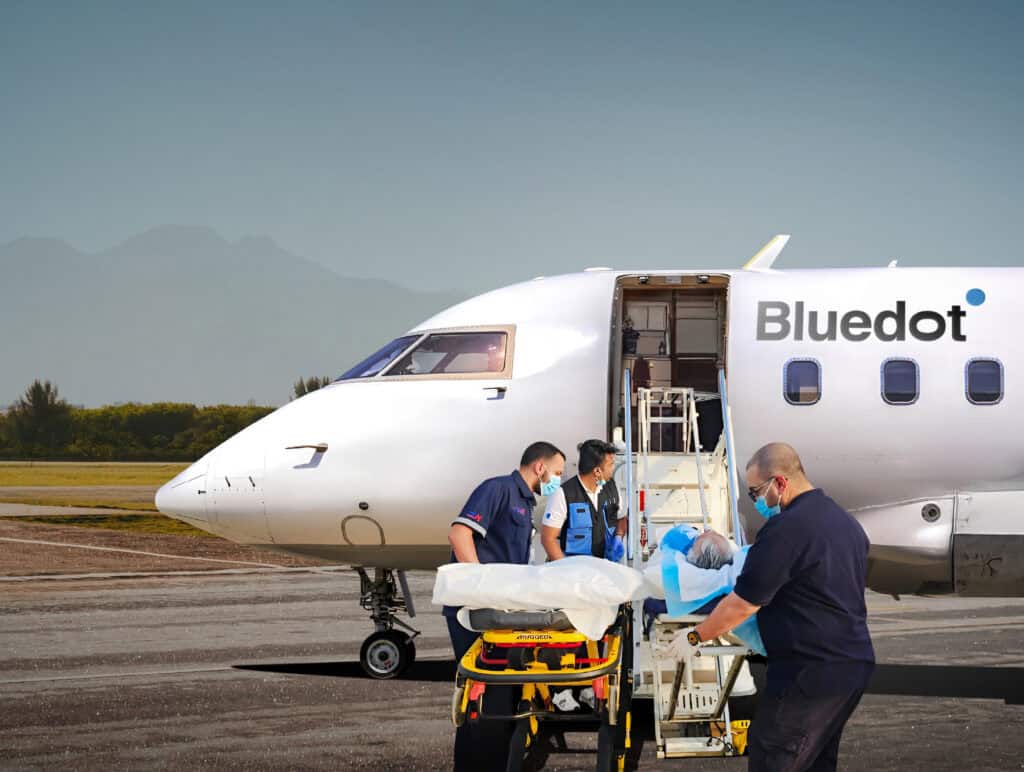
When the facility the patient needs is in another city or another country, air transport becomes the only practical option. A fixed-wing air ambulance, properly configured, functions as a flying intensive care unit, delivering the same standard of care in the air as on the ground.
What It Actually Takes
Long before the aircraft lifts off, the real work is already underway. The medical team reviews the patient’s full clinical picture, confirms the ECMO circuit’s integrity, and plans for every contingency the flight might bring. The retrieval team: a critical care physician, a transport-trained perfusionist, and a critical care nurse may travel to the patient’s location and initiate ECMO at the bedside before the journey even begins.
Every handoff from ICU to ambulance, from ambulance to aircraft, from aircraft to the receiving team is a moment where information can be lost and care can be interrupted. Controlling these transitions, with structured handovers and clear communication, is where experience makes all the difference.
The Bluedot Standard
At Bluedot, our 100% transfer success rate is something we are proud of, but more than that, it is something we are accountable to. It reflects years of careful system-building, rigorous training, and a commitment to standards that go beyond what is merely required.
To discuss an ECMO referral or learn more about our capabilities, our medical team at +971 551 881 441 available around the clock.