What Is Medical Repatriation?
Falling sick or getting injured while travelling is something most people never expect. But when it does happen, the stress is more than just medical—you’re far from home, far from your family, and often unsure of what comes next. This is where medical repatriation becomes essential. It helps bring a patient safely back to their home country or a familiar medical facility, with the right support throughout the journey. At Bluedot, we see every repatriation not just as a transfer, but as a moment when someone needs reassurance, clarity, and steady hands guiding the way. Here’s a simple, human explanation of when medical repatriation becomes necessary and how the entire process works behind the scenes.
What Is Medical Repatriation?
Medical repatriation is the process of bringing a patient back home for treatment, long-termcare, or recovery when they fall ill or get injured abroad
It’s not just transportation—it’s medical care in motion.
Depending on what the patient needs, this can be done through:
- A fully equipped air ambulance
- A commercial flight with a medical escort
- A stretcher setup on a commercial airline
- A non-emergency medical flight
Every format is designed around one question:
How do we keep the patient safe and comfortable throughout the journey?
When Do You Actually Need Medical Repatriation?
People need repatriation for different reasons, and often in situations that families don’t see coming.
1. Serious illness or injury abroad
Strokes, cardiac issues, fractures, infections—these can require care that’s better managed at home.
2. Limited medical facilities nearby
Some locations don’t have advanced treatment options or specialists, making a return home the safest choice.
3. When long-term care is needed
Rehabilitation, recovery, and follow-up care often work better closer to family and familiar systems
4. High medical costs overseas
Treatment can get expensive very quickly in some countries, and repatriating the patient can ease the financial burden.
5. When insurance recommends it
Many insurance providers request transfer once the patient is stable for movement.
6. For emotional or compassionate reasons
Sometimes families simply want to be together during a tough time—and that’s reason enough
How the Repatriation Process Actually Works?
Medical repatriation is a carefully coordinated operation involving doctors, hospitals, airlines, air ambulances, and global authorities. Here’s how the journey typically unfolds:
1. Medical Evaluation
First, the medical team reviews reports from the foreign hospital, monitors the patient’s condition, and checks if they’re fit to fly. This step decides:
- What kind of aircraft or setup is needed
- Which medical specialists must accompany the patient
- What equipment should be on board
The goal is simple: make sure the patient can travel safely.
2. Deciding the Best Mode of Transport
The decision depends on:
- How critical the patient is
- The distance involved
- Route and airport options
- Medical support needed during flight
Air ambulances are used for more severe cases, while stable patients may travel with a medical escort on commercial flights.
3. Coordinating With Hospitals and Authorities
This is where the real planning happens.
The team arranges:
- Discharge from the current hospital
- Admission at the receiving facility
- Ground ambulances at both ends
- Flight clearances and documentation
- Landing permissions across multiple countries (if required)
This part is complex, but families don’t need to worry—we handle all the moving pieces.
4. Preparing the Medical Team and Equipment
Every repatriation team is chosen based on the patient’s needs. It may include:
- Flight physicians
- Critical care nurses
- Paramedics
- Neonatal or paediatric specialists
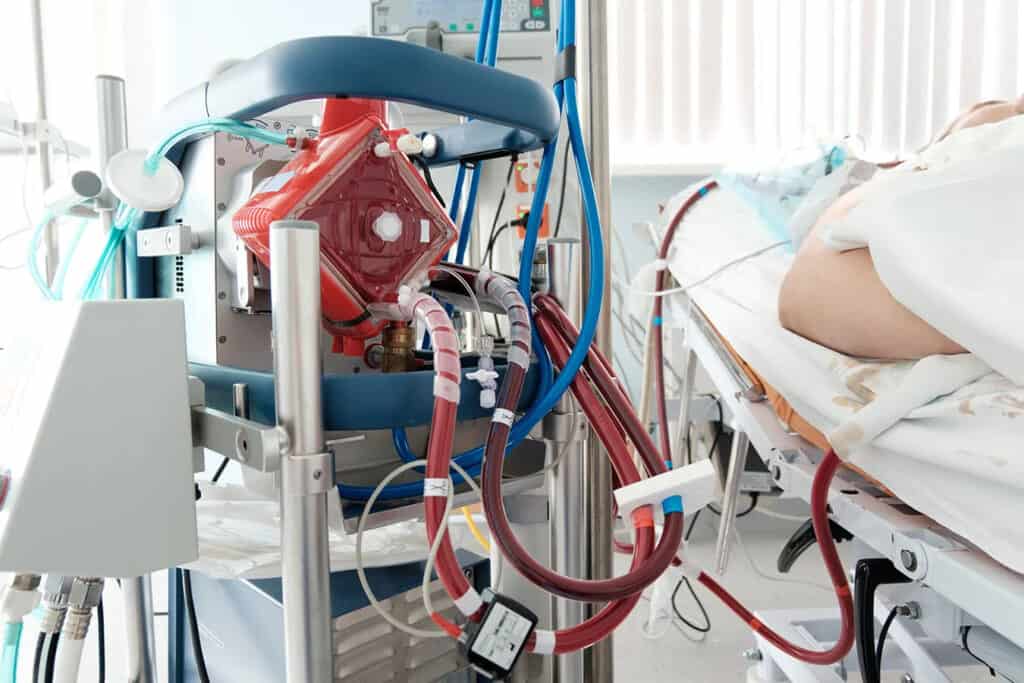
From ventilators to cardiac monitors and emergency medication, everything is prepared well in advance to avoid any risk mid-air.
5. The Transfer: Bed-to-Bed Support
The patient is moved with continuous medical supervision from:
- Bedside at the sending hospital
- Ground ambulance
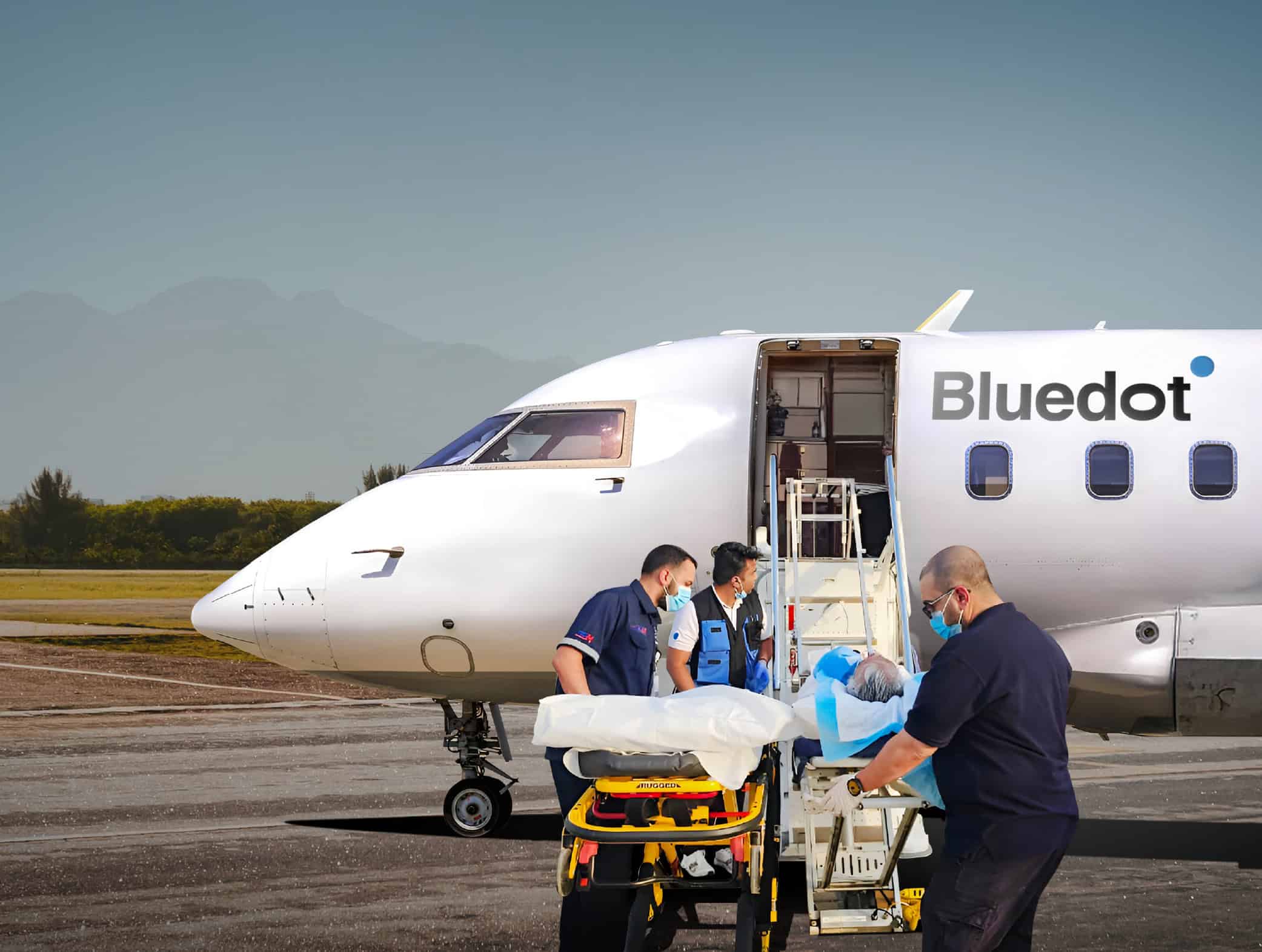
- Aircraft
- Ground ambulance again
- Bedside at the receiving hospital
At every stage, the medical team monitors vitals, manages medication, and keeps the family informed.
6. Arrival and Handover
After landing, the patient is handed over to the receiving medical team. A full briefing, documentation, and update ensure continuity of care without delays.
Real Missions That Reflect What We Do
While every mission is unique, some journeys highlight the depth of coordination and care that medical repatriation requires. Here are two recent examples that reflect our work:
Bangkok → Doha: A High-Priority Air Ambulance Transfer
Bluedot successfully transported a critically ill patient from Bangkok to Doha — someone battling multiple complex conditions including coronary artery disease, post–cardiac arrest complications, sepsis, pneumonia, and acute kidney injury requiring hemodialysis. With a dedicated medical escort team on board, the patient received round-the-clock monitoring, ventilatory support, medication management, and treatment continuity throughout the flight. This mission reflects what medical repatriation truly is: bridging distance when time and health are most critical.
Calicut → Riyadh: A Lifeline for a Ventilator-Dependent Patient
In another mission, Bluedot completed a critical transfer from Calicut to Riyadh in under five hours using a Challenger 605. The patient, diagnosed with tetanus and critical illness myopathy and dependent on a ventilator after a tracheostomy, was transported under strict ICU-level supervision. With advanced life-support equipment on board and a highly skilled medical team, the patient reached Riyadh safely for continued specialized care.
Why Choosing the Right Partner Matters
Medical repatriation sounds straightforward, but it involves critical decisions, international regulations, flight safety considerations, and real-time medical care. A small misstep can delay the process or put the patient at risk.
Bluedot follows global aero-medical standards and uses a highly trained team to ensure:
- Safety
- Speed
- Compliance
- Medical accuracy
- Clear communication with families
Every mission is designed to ease stress, reduce uncertainty, and keep the patient at the centre of every decision.
Final Thoughts
Needing medical repatriation can feel overwhelming, especially when you’re far from home. But with the right team coordinating every detail—from the first medical assessment to the final hospital handover—the journey becomes safer, smoother, and far less stressful. Bluedot’s role is to bring patients home with care, dignity, and confidence, ensuring families feel supported every step of the way.